
Governance for Health within Planetary Boundaries
Planetary health policies systematically consider their impact on both human health and natural ecosystems equally. Furthermore, the concept promotes political decision-making that aims to minimise harm to people and planet. A planetary health in all policies (PHiaP) approach extends the concept of health in all policies, an approach to public policies that systematically takes into account the health implications of political decisions and seeks to avoid harmful health impacts in order to improve population health and health equity. PHiaP adds the notion that all policy decisions should be taken with a view to enabling societies to remain within safe ecological limits, also known as the nine planetary boundaries. A PHiAP approach can enable both planet and people to thrive within planetary boundaries.

Many of the determinants of health and health inequities in populations have social, environmental, and economic origins that extend beyond the direct influence of the health sector and health policies. Planetary health policy builds on intersectoral policy aims, based on health in all policies that improve the social determinants of health, while explicitly addressing the ecological degradation of the planet that threatens its habitability which ultimately determines human health and survival.
Outcomes of this workstream will include conceptual and operational analyses and policy recommendations for the German political context, e.g. in the domain of energy, agricultural and labour market transitions.
Read more in our analyses


Projects on Governance for Health within Planetary Boundaries

Nature as a Health Resource (NaG): Perspectives and recommendations for “Nature Prescribing” in Germany
The project examines the concept of ‘nature prescribing’ and prospects for its implementation in Germany and thereby strengthening health, environmental protection and nature conservation.
» Learn more about the project Nature as a Health Resource (NaG)


Health Care System as Driver for Food System Transformation
The transformation of the food system towards more plant-based diets, in line with the Planetary Health Diet, is a key driver of human and planetary health. It lowers the prevalence of non-communicable diseases, reduces greenhouse gas emissions and makes a significant contribution to the preservation of ecosystem services. These effects ease the burden on healthcare systems and strengthen their resilience.

Ambitious and Just Transposition of the AAQD in Germany
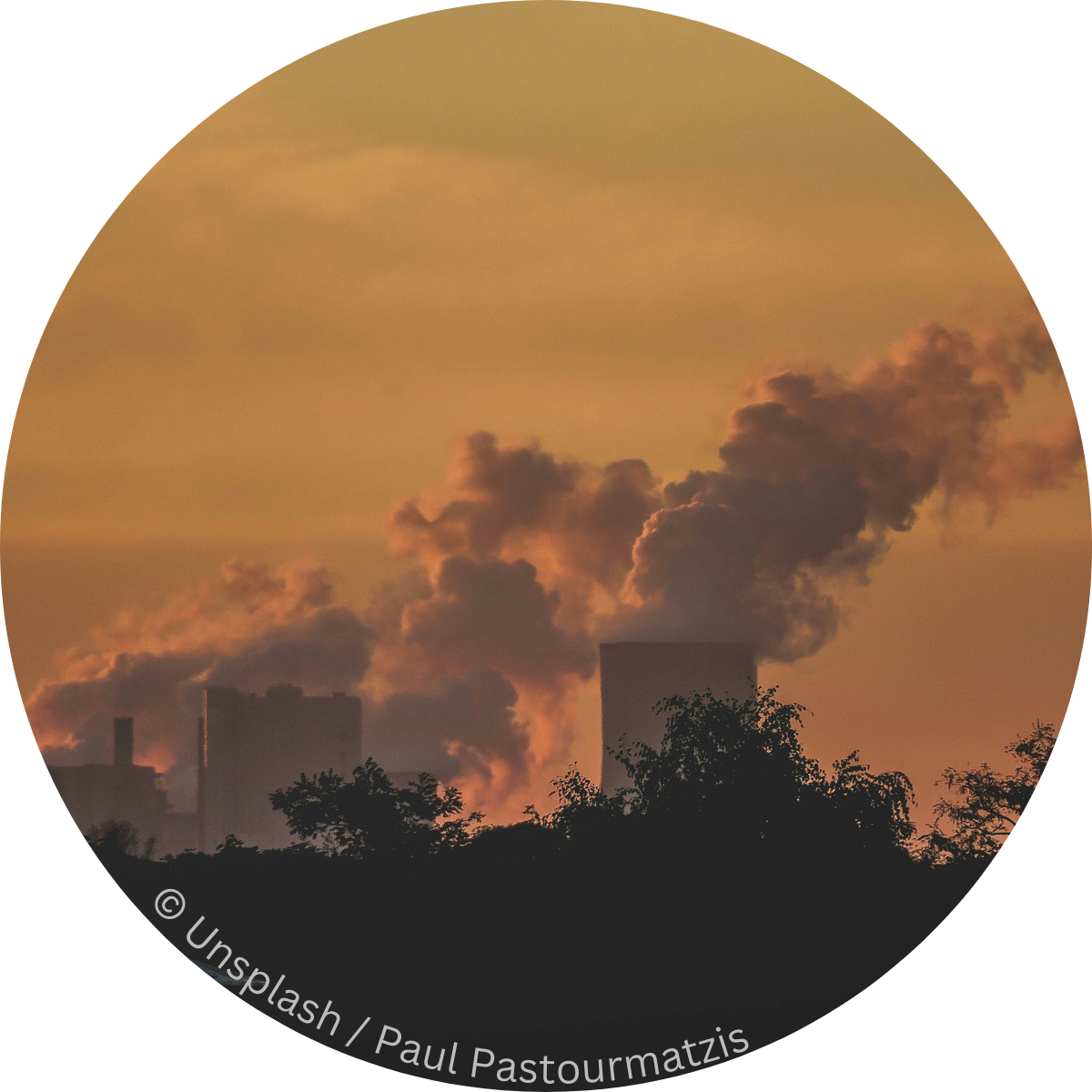
This project aims to support the most polluted regions of Germany in implementing the new pollutant limits without time-limited exemptions. It identifies politically feasible, cost-efficient and socially equitable ways to comply with the limit values — with a focus on particulate matter (PM) and nitrogen dioxide (NO₂) as well as central emission sources such as traffic and domestic heating. The findings lead to political recommendations for regional air quality plans and federal policy decisions.
» Learn more about the project on the transposition of the Ambient Air Quality Directive

Diagnosing Pollution: Environmental Chemicals as a Health Challenge – From Knowledge to Action
The increasing contamination of the environment with chemicals represents one of the greatest and still largely underestimated threats to human health. The health sector is affected in a particularly profound way: it not only contributes to the release of problematic chemicals, but is also directly confronted with their health impacts.
Funded by the TARGOBANK Foundation, the project “Diagnosing Pollution” raises awareness among health professionals of the impacts of environmental chemicals, provides knowledge on health risks and regulatory approaches, and highlights concrete and actionable measures to reduce the use of harmful chemicals within the health sector.
» Learn more about the project on “Diagnosing Pollution”


ARBEIT: SICHER + GESUND Safe and Healthy Work in a Changing Climate
Climate change is transforming the world of work. Increasing heat, extreme weather events, as well as physical and psychological stress present challenges for employees and leaders alike. In the BMAS-funded project “ARBEIT: SICHER + GESUND Safe an healthy work in a changing climate (ASUG-Klima),” the CPHP, together with a consortium of scientists, policy advisors, and communication experts, is investigating which occupational groups are particularly affected and developing solutions for climate- and human-friendly, safe working environments.
Besides this project and on behalf of the BMAS, the CPHP conducted a workshop in June 2023 focusing on the effects of increasing heat on the workplace. The aim was to present and discuss practical heat protection measures with occupational health and safety experts.
In 2022, the CPHP has prepared an expert report on “Climate Change and Health in the Workplace” on behalf of the BMAS.
» Learn more about the project on safe and healthy work in a changing climate

Climate Change and Health: Parliamentary Dialogue in the New Legislative Term
The re-elected and newly elected members of parliament have a great responsibility as well as a large opportunity to strengthen climate and health protection in the new legislative period. In this project
the CPHP provides a platform for science-based information, active dialogue and open exchange. The aim is to strengthen the commitment of and cooperation between experienced and new members of parliament at the interface of climate change and health.
» Learn more about the parliamentary dialogue on climate change and health


Lancet Countdown Annual Report Launch — Germany
In addition to the annual publication of the Lancet Countdown reports, national initiatives have increasingly emerged to present the key findings of the global report, place them in the local context and formulate adapted recommendations for policy makers in the respective country. Since 2022, the German initiative has been coordinated by the Center for Planetary Health Policy (CPHP).
» Learn more about the project on the German Lancet Countdown initiative

Prevention and Health Promotion from a Planetary Health Perspective
Health promotion and prevention focused on living environments hold significant potential to achieve co-benefits for both climate and the environment. This means that many measures aimed at improving people’s health and well-being in their daily environments and preventing disease also help protect the environment. For instance, promoting healthier, plant-based diets can be an example, with a particular emphasis on improving the structural conditions in people’s living environments that determine dietary choices. In cooperation with BARMER health insurance and KLUG e.V., we analyse the Prevention Guide from the National Association of Statutory Health Insurance Funds (GKV-Spitzenverband) to explore the scope of action that health insurers have in implementing measures with co-benefits. Furthermore, we develop quality indicators for project funding in the field of health promotion and prevention in living environments, which consider the interconnections between climate, environment, and human health. As part of this, we train employees to become change agents within the BARMER health insurance organisation.


Policy Analysis of the Development and Implementation of National Portfolios of Action on Environment and Health
On behalf of the European Centre for Environment and Health of the World Health Organization (WHO ECEH), CPHP has analyzed the national portfolios of the WHO European countries in preparation for the Ministerial Conference on Environment and Health (July 2023 in Budapest). To this end, the CPHP scientists carried out a desk review and expert consultations in the member states, prepared case studies with best practice examples and discussed these with WHO representatives.
» Learn more about the policy analysis on national environment and health portfolios
Assigned by

Climate Change and Health: Status Report & Expert Discussions
On behalf of the Robert Koch Institute (RKI), CPHP supported the creation and dissemination of the RKI status report “Climate Change and Health.” The goal was to render the report’s findings actionable for decision-makers in politics and healthcare, while also communicating the results to a broad audience. Additionally, on behalf of the RKI, CPHP produced an evidence synthesis on the effects of the climate crisis on global health protection.
In September 2023, CPHP, in cooperation with the Climate Change and Health Office at the Robert Koch Institute and the Federal Center for Health Education (BZgA), organized three virtual expert discussions on the findings of the report.
» Learn more about the project on the RKI status report and expert discussions

AirHealth: Strengthening Germany’s Air Quality Policy to Protect Public Health
With the revision of the Air Quality Directive, the European Union is partially aligning the legal framework and standards for air quality in its member states with the new evidence-based recommendations of the WHO. In this context, the CPHP analyses the ecological and economic added value of health-protective air quality standards and organizes expert discussions with political decision-makers and experts. The aim is to analyze Germany’s role in the European negotiations and to advance the political and public debate in Germany. The project is funded by the Clean Air Fund.
» Learn more about the AirHealth project on strengthening air quality policy
Mapping the Stakeholder Landscape in the Field of Climate Change and Health in Germany
Together with the Wellcome Trust, the CPHP is mapping the German stakeholder landscape in the field of climate change and health, particularly in preparation for important international events in 2023, such as the World Health Summit (WHS) and the UN Climate Change Conference (COP28). The project aims to draw a picture of the current political debates in this field of action and to enter into discussions with the relevant and influential actors.
» Learn more about the project on mapping climate and health stakeholders in Germany
Contact us

Dorothea Baltruks
Director CPHP

Miriam Meschede
Research Associate

Marie Jung
Research Associate